Magnesium glycinate for sleep: dose, timing and what the research shows
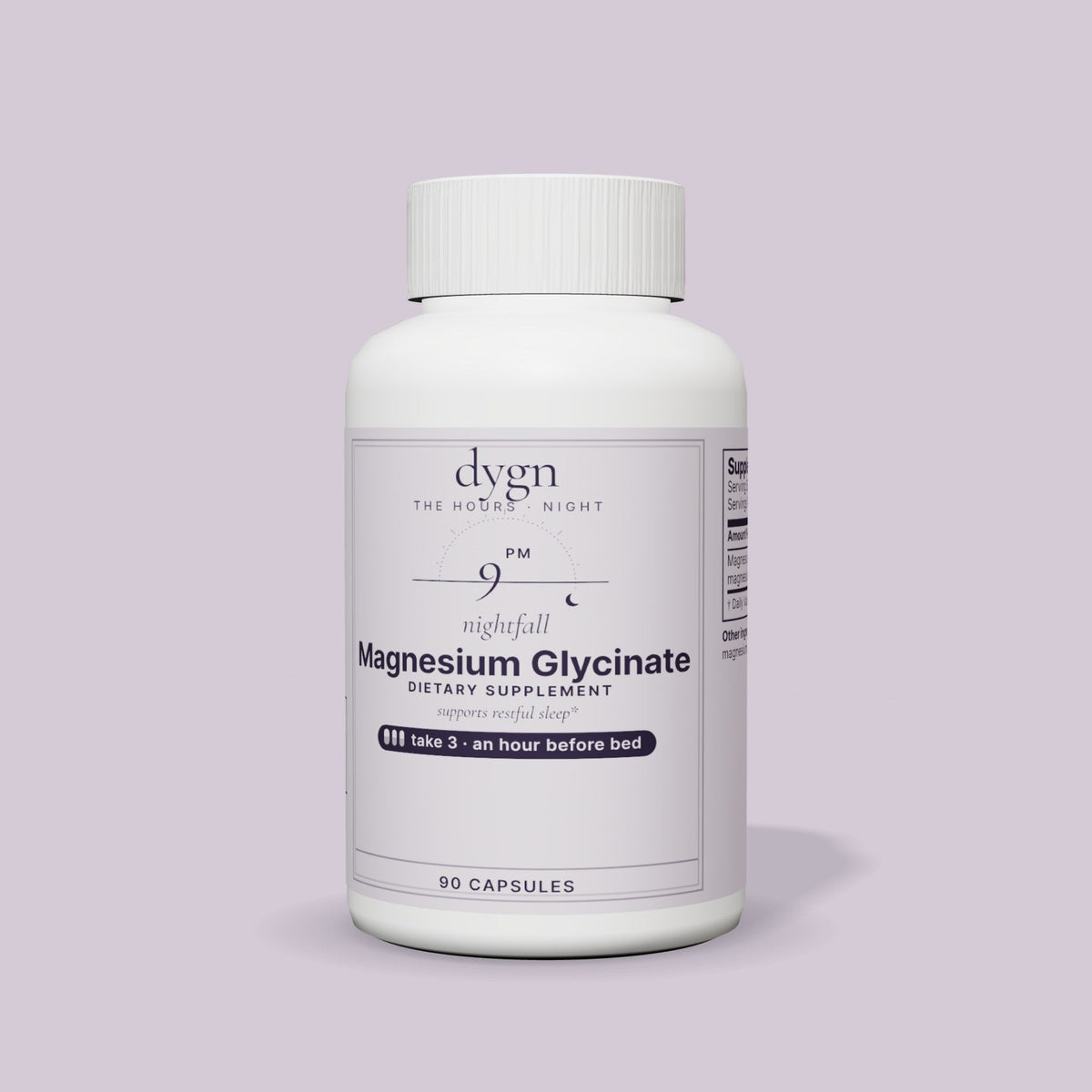
Short answer: take magnesium glycinate about an hour before bed, every night. Glycinate is magnesium bound to the amino acid glycine. It is well absorbed and gentle on the stomach, and it contains no melatonin. nightfall gives 275 mg of elemental magnesium from 2,500 mg magnesium glycinate in 3 capsules.
What the research shows
In a placebo-controlled trial, 46 older adults took 500 mg of magnesium daily for 8 weeks. Compared with placebo, they fell asleep faster and had better sleep efficiency (Abbasi et al., 2012).* Magnesium is involved in hundreds of enzyme reactions, including those of the nervous system, and many adults in the US get less than the recommended amount from food (NIH Office of Dietary Supplements).
How much magnesium?
The adult recommended intake from all sources is about 310–420 mg a day, depending on age and sex. The upper limit for magnesium from supplements is 350 mg a day for adults (NIH ODS). nightfall's 275 mg sits under that limit, leaving room for magnesium from food.
Why an hour before bed?
It gives the capsule time to dissolve and turns the dose into a wind-down cue: lights lower, screens off, three capsules. A routine you repeat is easier to keep than a dose you remember at midnight.
Magnesium vs. melatonin
Melatonin is a hormone that signals the timing of sleep. Magnesium is a mineral your body needs every day. They are different tools. nightfall is magnesium only, for people who want a melatonin-free evening routine.
Glycinate vs. citrate vs. oxide
- Glycinate: well absorbed and the least likely to upset the stomach. The usual choice for an evening routine.
- Citrate: well absorbed, with a stronger laxative effect at higher doses.
- Oxide: inexpensive, with lower absorption and more digestive side effects.
Who should ask a doctor first
Check with your healthcare provider if you have kidney disease, take antibiotics, bisphosphonates, diuretics or other medication, or are pregnant or nursing.
Sources
- Abbasi B, et al. Journal of Research in Medical Sciences, 2012.
- NIH Office of Dietary Supplements: Magnesium fact sheet.
*These statements have not been evaluated by the Food and Drug Administration. This product is not intended to diagnose, treat, cure, or prevent any disease.
7am, 3pm, 9pm. Free US shipping.